Cryogenic valves are essential components in systems that handle extremely low-temperature fluids such as liquefied natural gas (LNG), liquid nitrogen, oxygen, argon, and helium. These valves are designed to operate reliably under conditions where conventional industrial valves fail due to material contraction, sealing challenges, and pressure instability.
As global demand for LNG, industrial gases, and clean energy continues to grow, cryogenic valve performance has become a critical factor in system safety, efficiency, and long-term operating cost. This page provides a comprehensive overview of cryogenic valves, including temperature ranges, design challenges, valve types, applications, and manufacturing standards.
A cryogenic valve is a specially engineered valve designed to control fluids at cryogenic temperatures, typically –150°C (–238°F) and below. At these temperatures, many gases exist in liquid form and can rapidly vaporize if exposed to heat or pressure changes.
Unlike standard valves, cryogenic valves must maintain tight shutoff, structural integrity, and smooth operation despite extreme thermal contraction and repeated temperature cycling.
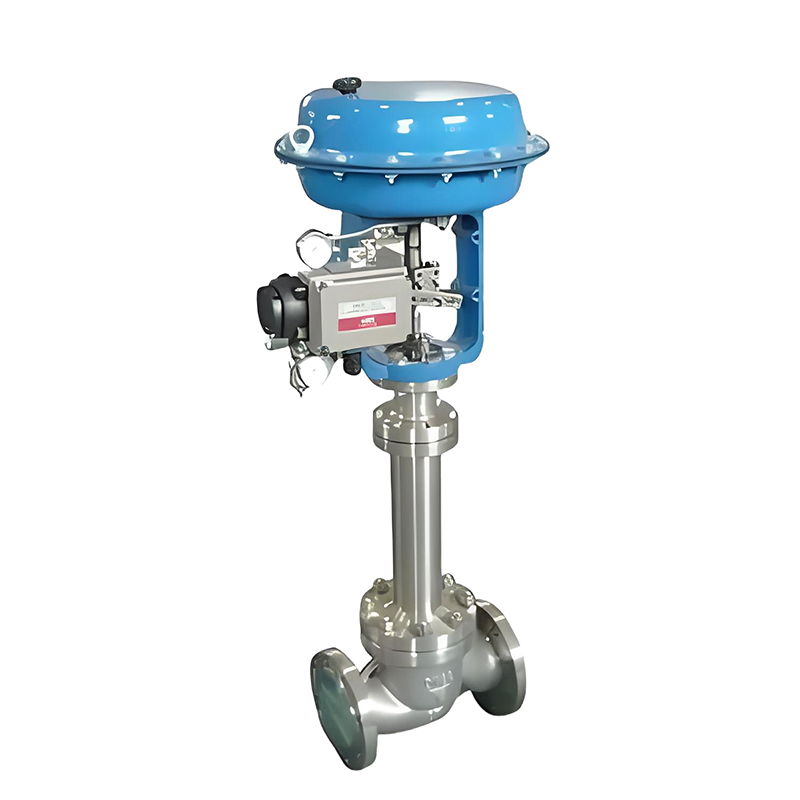
In industrial practice, low-temperature service is commonly divided into refrigeration and cryogenic ranges.
| Temperature Range | Classification | Typical Media |
| 3°C to –150°C | Refrigeration service | CO₂, propane, ammonia |
| –150°C and below | Cryogenic service | LNG, nitrogen, oxygen, argon, helium |
Cryogenic fluids are inherently unstable at atmospheric pressure. Even minimal environmental heat gain can cause rapid vaporization, resulting in pressure buildup within pipelines and valves. This makes proper valve design and system insulation mandatory.
Cryogenic valves operate by controlling the flow of liquefied gases at extremely low temperatures while maintaining tight sealing and mechanical stability. Although the basic open-and-close function is similar to conventional valves, cryogenic service introduces unique design features that directly affect how the valve works in operation.
When cryogenic fluid flows through the valve, extreme cold causes the valve body, stem, and internal components to contract. To compensate for this, cryogenic valves are designed with precise clearances that ensure proper alignment and sealing at operating temperature, not at ambient conditions.
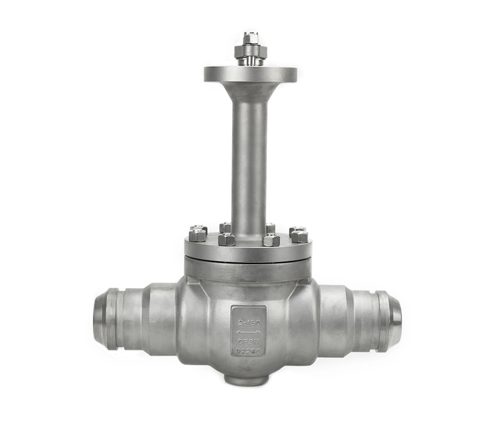
A key working principle of cryogenic valves is thermal isolation of critical sealing areas. Extended bonnet designs physically separate the stem packing and sealing components from the cold fluid zone. This allows seals to operate at higher temperatures, preserving elasticity and preventing leakage during temperature cycling.
Cryogenic valves also account for pressure changes caused by heat ingress. As small amounts of cryogenic liquid vaporize, internal pressure increases. The valve structure must safely withstand this pressure while maintaining smooth operation and reliable shutoff.
In quarter-turn cryogenic valves such as ball valves, the valve operates with minimal stem movement, reducing friction and wear under thermal stress. In linear-motion valves, such as gate and globe valves, the design must carefully manage stem expansion and contraction to avoid seat leakage.
Overall, cryogenic valves work by combining controlled thermal management, material selection, and precision engineering to ensure safe, leak-tight performance in extreme low-temperature environments.
Cryogenic service introduces several technical challenges that directly influence valve selection and performance.
Material Contraction and Thermal Stress
Different materials contract at different rates when exposed to extreme cold. In a valve assembly, this can affect the body, stem, seat, and sealing elements simultaneously. If not properly engineered, these dimensional changes may result in leakage or operational failure.
Seat Leakage and Stem Growth
One of the most common issues in cryogenic valves is seat leakage caused by underestimated stem growth and body deformation. Both linear and radial movement must be accounted for during design to maintain sealing performance at operating temperature.
Heat Gain and Pressure Buildup
Heat ingress from the environment is unavoidable, even with insulation. As cryogenic liquids absorb heat, vaporization occurs, leading to pressure buildup. Valves must operate safely under these conditions without distortion or loss of tight shutoff.
There is no universal valve type suitable for all cryogenic applications. Selection depends on size, pressure class, media, and operational requirements.
| Valve Type | Typical Applications | Key Advantages |
| Cryogenic Ball Valve | LNG, industrial gas pipelines | Excellent tight shutoff, quarter-turn operation |
| Cryogenic Gate Valve | Large-diameter pipelines | Cost-effective for large sizes |
| Cryogenic Butterfly Valve | Storage tanks, terminals | Compact design, low torque |
| Cryogenic Globe Valve | Flow regulation | Precise throttling control |
Quarter-turn valves, particularly cryogenic ball valves, are widely used due to their reliable sealing performance. For larger diameters, gate valves are often preferred as a more economical solution.
End connection type affects installation, maintenance, and system integrity.
| Connection Type | Features | Typical Use |
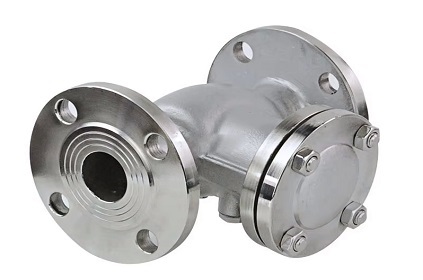
| Flanged | Easy installation and maintenance | LNG terminals, process plants |
| Welded | Leak-free, permanent connection | High-integrity pipelines |
| Extended Bonnet | Protects stem sealing from cold | Standard for cryogenic service |
Extended bonnet designs are commonly used to keep stem seals at a higher temperature, reducing the risk of leakage and seal degradation.
Cleanliness is a critical requirement for cryogenic valves. Any contamination inside the valve—such as grease, machine oil, or debris—can interfere with operation at low temperatures or react dangerously with certain media like oxygen.
Cryogenic valves should be:
Assembled in controlled or clean-room environments
Free from non-compatible lubricants
Subject to documented cleaning and inspection procedures
Operators are strongly advised to request cleaning and assembly documentation from manufacturers to ensure compliance with cryogenic service standards.
Cryogenic valves are widely used across multiple industries:
LNG liquefaction and regasification plants
Industrial gas production and distribution
Petrochemical and chemical processing
Aerospace and research facilities
Energy transportation and storage systems
Each application presents unique operational demands, reinforcing the importance of correct valve selection and manufacturing quality.
LQH Valves designs and manufactures cryogenic valves with a focus on safety, reliability, and long service life. Through careful material selection, precision machining, clean assembly processes, and rigorous testing, LQH ensures stable valve performance in extreme low-temperature environments.
LQH cryogenic valves are suitable for LNG, industrial gas, and other demanding cryogenic applications where tight shutoff and durability are essential.
This is the first one.
.webp "High temperature gate valve T40-16P")